Welcome Emma!
Materials Design @ Georgetown
Welcome to the ZhouLab
We develop synthesis-guided strategies for rational design in solid-state materials. Our work connects new synthetic methods, chalcogenide chemistry, quantum materials, and structure-property relationships to help create materials with precisely tailored functions.
Open postdoctoral position: We are recruiting a postdoctoral associate in materials design and synthesis. View the position description.
Our vision is to achieve rational design in solid-state materials by mastering the art and science of their synthesis. While fields like organic chemistry allow for predictable retrosynthetic planning, achieving such ‘synthesis-by-design’ for extended solids remains a grand challenge. We are dedicated to bridging this gap by developing the fundamental concepts and innovative techniques that will guide the creation of novel materials.
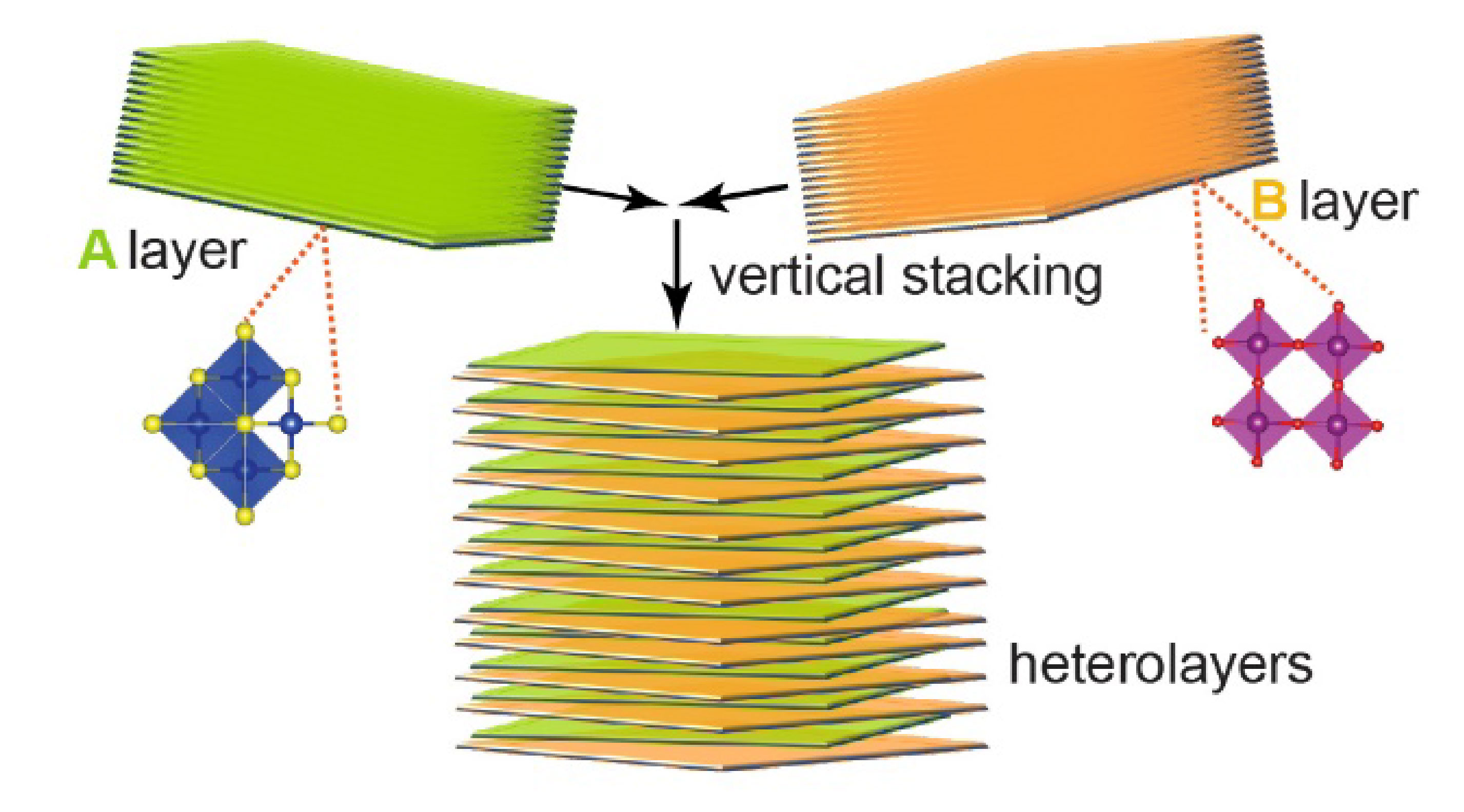
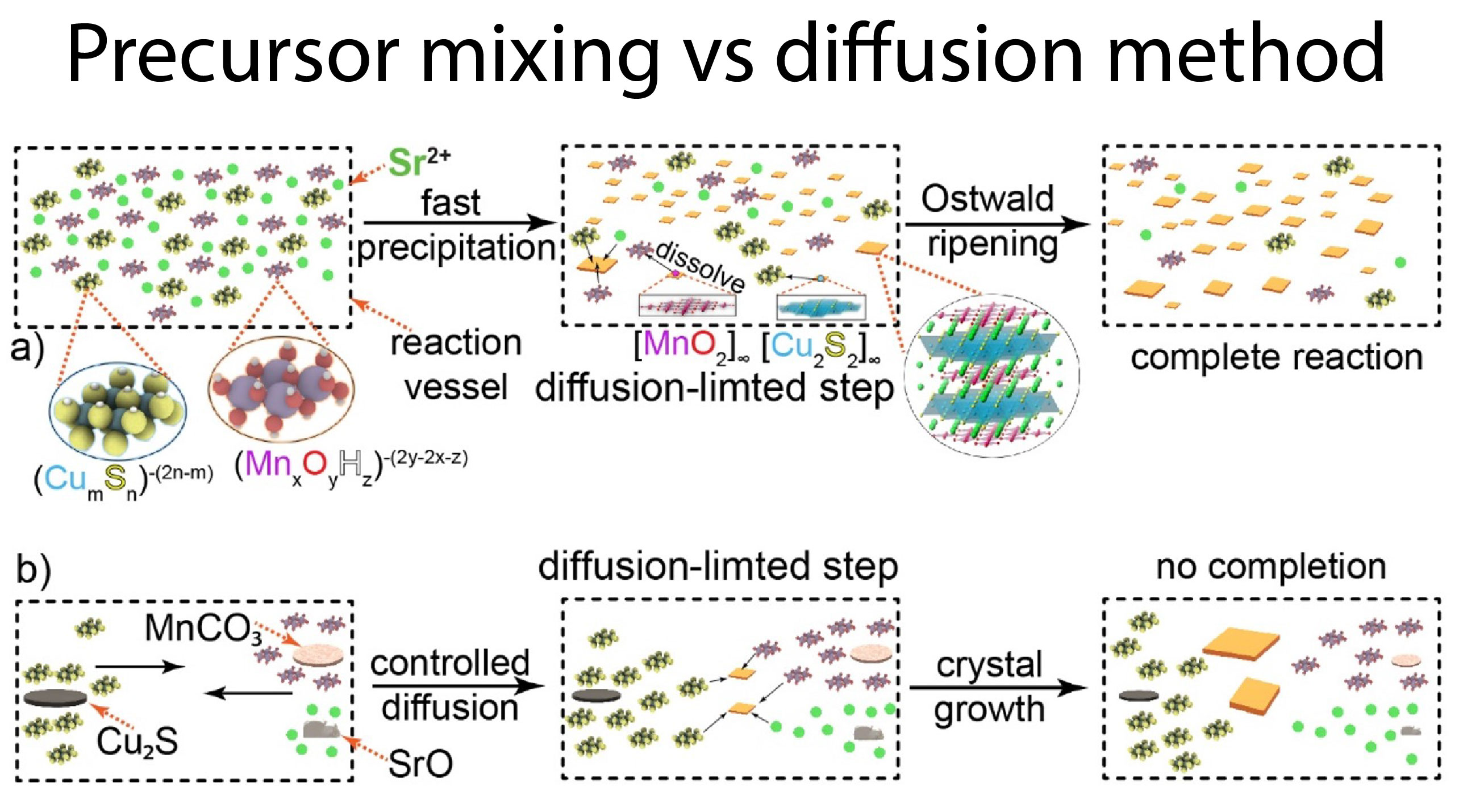
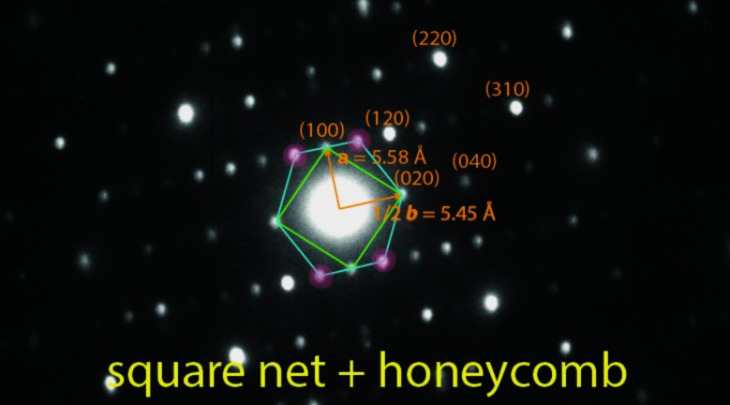
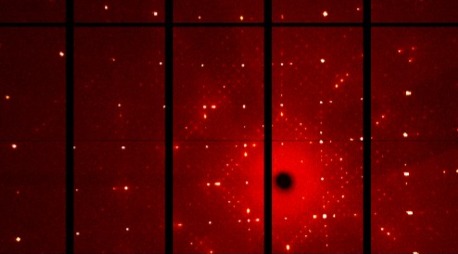
Research Highlight
Modular Structural Evolution Through “Anionic Disparity”
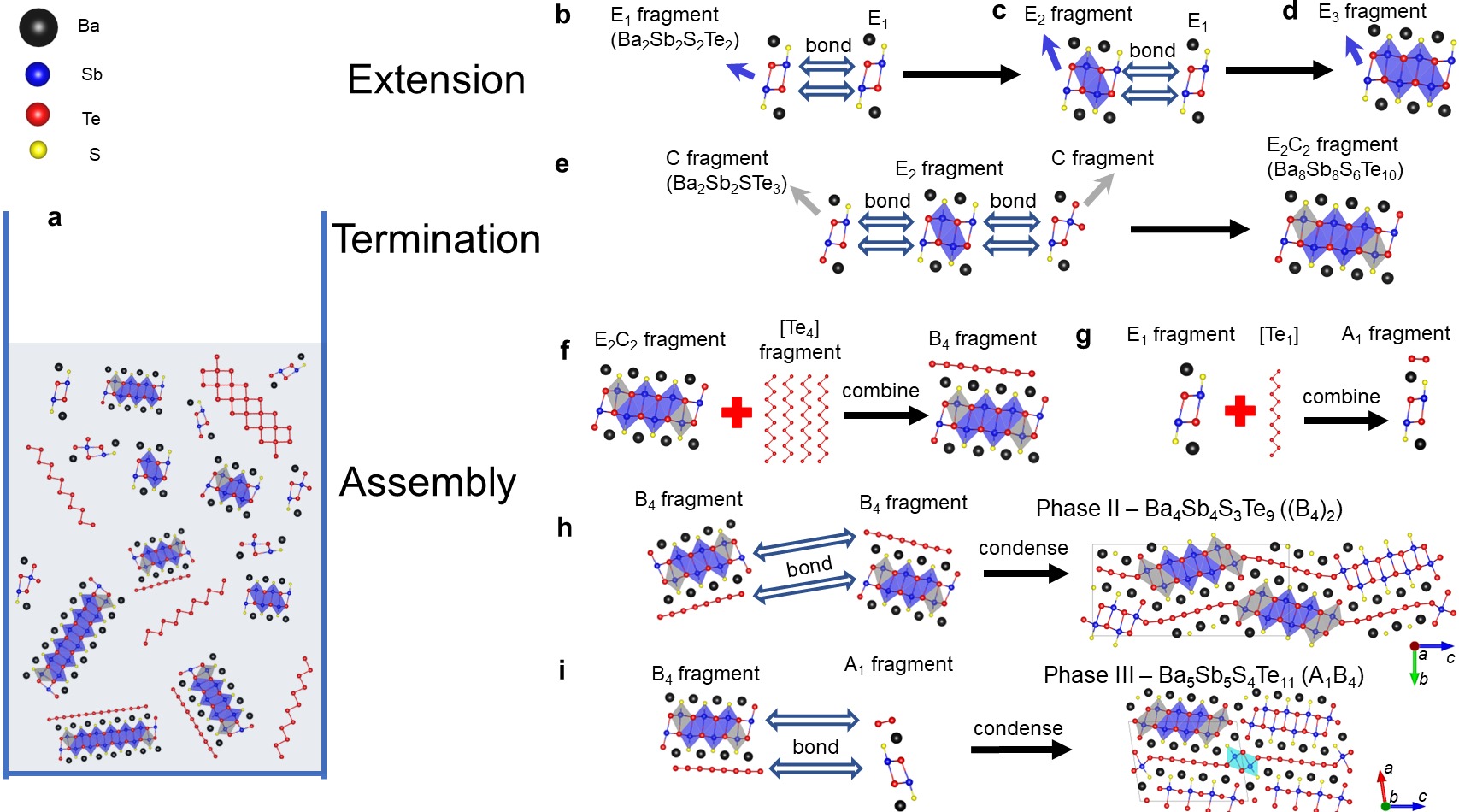
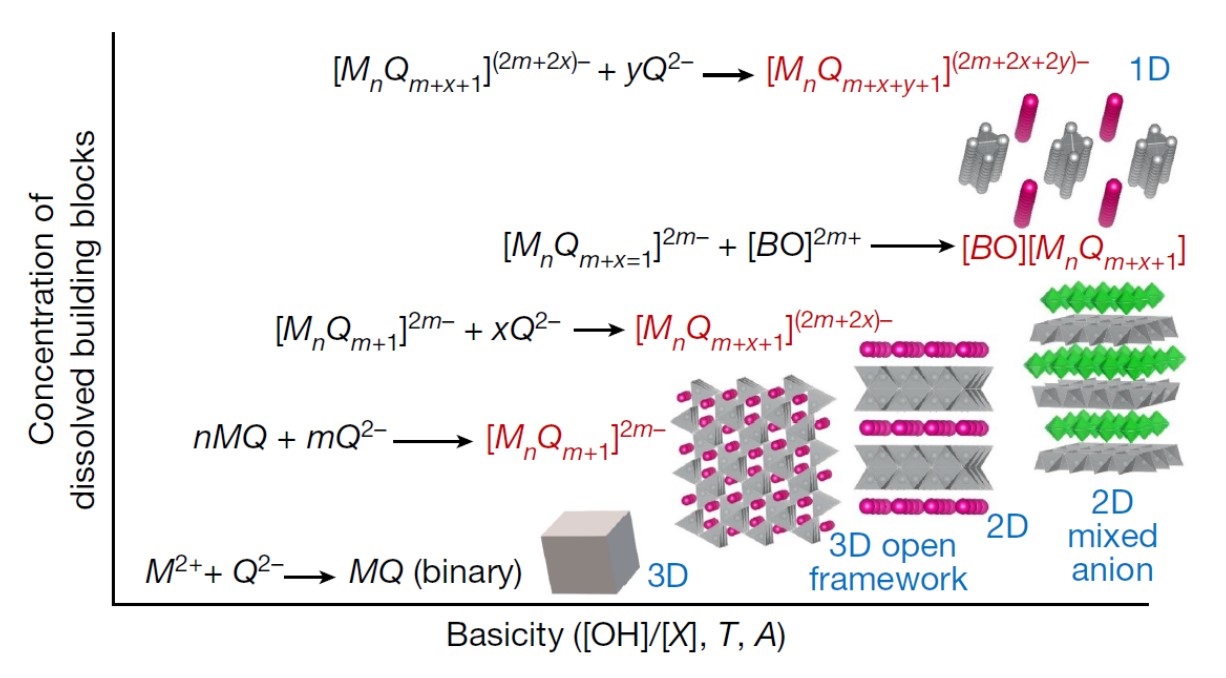
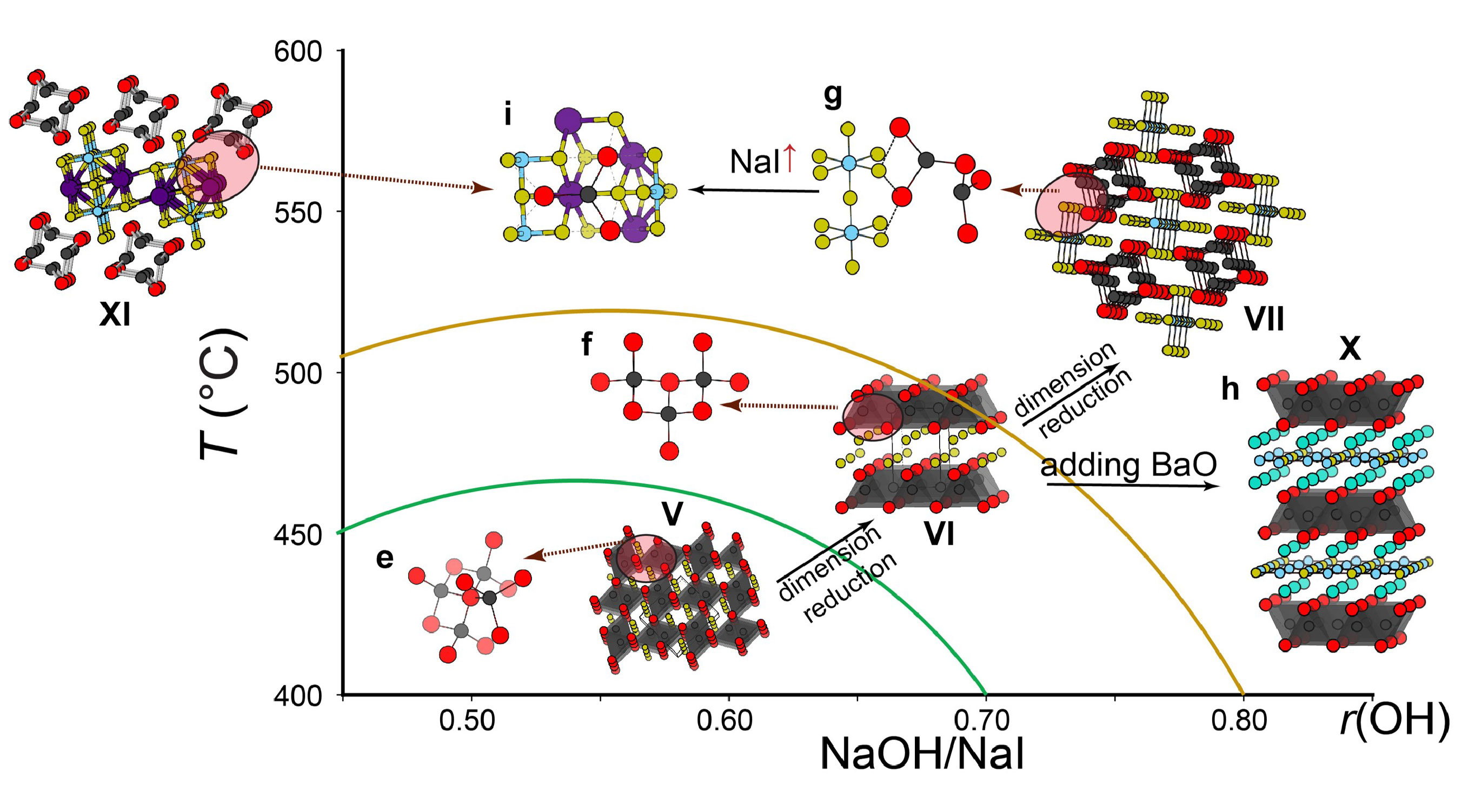
In solid-state chemistry, predicting exactly how extended structures assemble from the ground up remains a formidable challenge. In our latest paper published in Science, we introduce a new predictive design strategy called “Anionic Disparity”, which leverages the electronegativity differences between anions to control structural evolution.
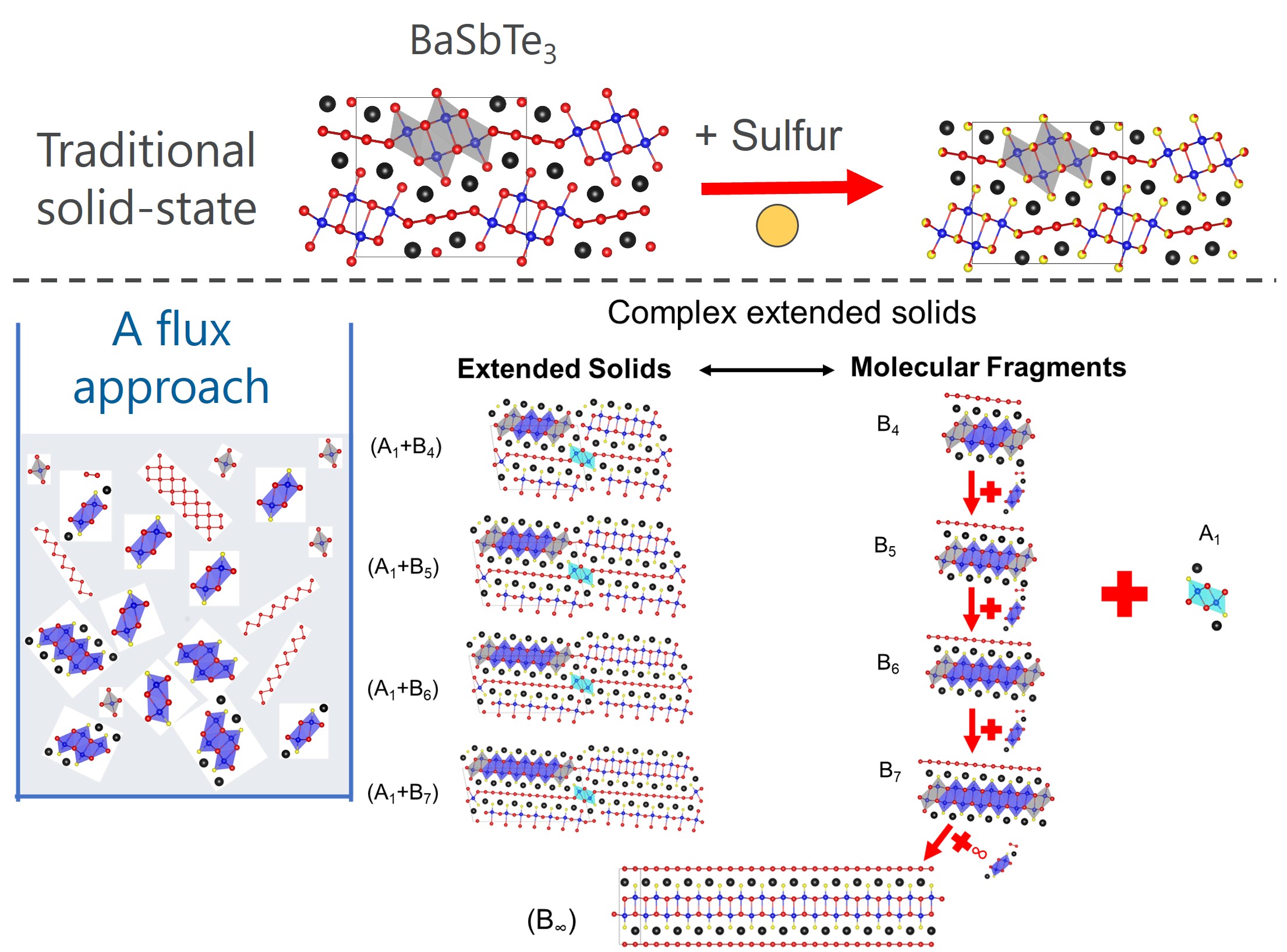
Typically, the isovalent mixing of chemically similar elements, such as sulfur (S) and tellurium (Te), leads to disordered solid solutions. However, by using the solution chemistry of polychalcogenide flux, we utilized anionic disparity to control the speciation of polytellurides.
This approach yielded an unexpected result in the BaSbQ3 (Q = Te1-xSx) system. Instead of forming a conventional solid solution, the introduction of sulfur systematically drives charge redistribution. This allowed us to achieve:
- Modular Assembly: We observed a systematic, modular evolution of fundamental building blocks, growing incrementally from a 2-block-wide fragment all the way to infinity. This is a rare phenomenon in solid-state chemistry, akin to the incremental growth of alkane chains in organic chemistry.
- The “Stoichiomorph” Concept: This work establishes a new structurally conserved homologous family. We define these as “stoichiomorphs”: structurally distinct homologous series that share near-identical chemical compositions.
This concept opens up a new “playground” for understanding the assembly of extended solids at the molecular level. More importantly, this framework is designed to be highly scalable and is readily adaptable to AI and machine learning-guided materials discovery across a wide variety of complex chemical systems as highlighted in this news article.
News
Our recent work published in Science has been featured by Argonne National Laboratory! Read the official press release
Congratulations to Luka on receiving the ChemMatCARS Graduate Student Research Award (GSRAC)!
Our new work on controlling infinite structural diversity in a stoichiometrically conserved homologous series now out in Science!